
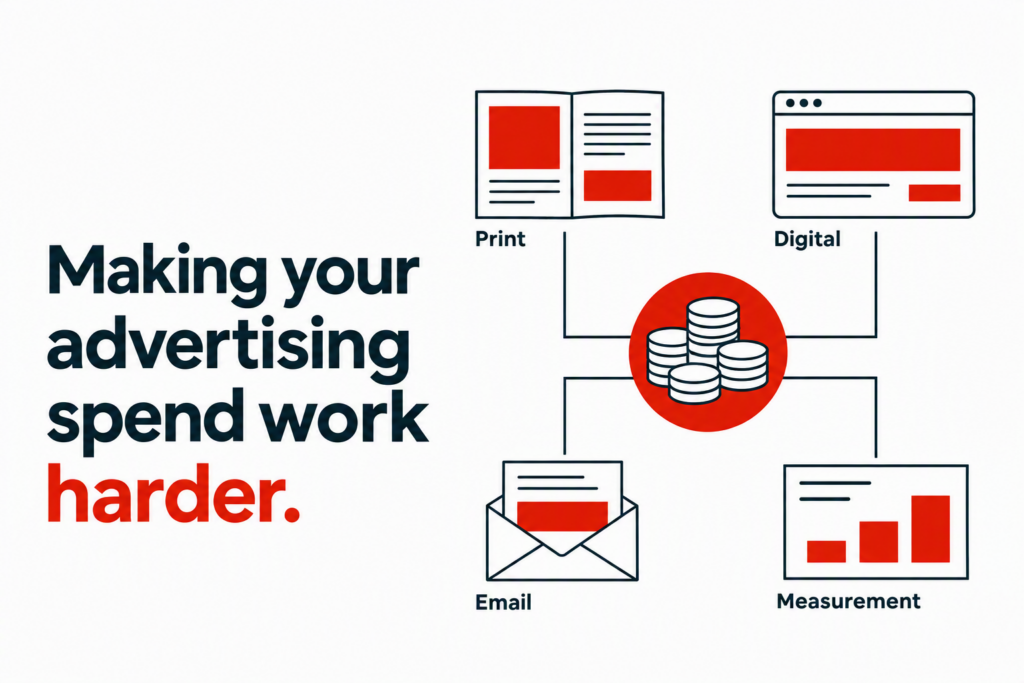
TL;DR: A modest advertising budget does not have to mean modest results. This blog highlights five ways to make every pound work harder: Start with a clear audience and objective; focus your spend on fewer, more relevant channels; explore alternative formats and added value opportunities; support every placement with a strong creative and a relevant landing page; and use campaign data to understand what is working and refine your activity.
MAKING YOUR ADVERTISING SPEND WORK HARDER
A limited advertising budget does not mean limited results. A carefully targeted paid media campaign can outperform a larger but less strategic investment. The key is knowing what you want to achieve, who you need to influence and how best to reach them.
Here are five ways to make every advertising pound work harder:
1. Start with your audience and objective
Instead of starting with “What can we afford?”, ask: “Who are we trying to influence, and what do we want them to do?”
Understanding your target audience is critical to any successful advertising campaign, but it becomes even more important when the budget is limited. A clear audience profile helps you identify the publications, platforms and opportunities most likely to reach the right people.
Also consider what your objective is of the paid media campaign – are you looking to build brand awareness, generate leads, support an event, or promote a product? The answer will determine where to invest, which formats will perform best against the objective, and how to measure success.
2. Choose fewer channels and use them well
Trying to be visible everywhere can quickly dilute a modest budget’s impact. Instead, concentrate your activity on a small number of media partners relevant to your audience.
A focused campaign with one or two leading media partners can create greater recall than isolated placements across many outlets, giving your messaging the repetition and consistency needed to build credibility.
3. Look beyond the most obvious formats
A full-page print advert or a large digital display campaign is not always the most effective option. Depending on your audience and objective, more considered, editorial-based formats could include:
- Targeted direct emails
- Strip ads aligned with relevant editorial features
- Content-led banners
- Advertorials
Paid packages may also include editorial and social opportunities that extend your campaign beyond the original placement.
4. Make the creative work harder
Even the best media plan can be undermined by a weak creative. If the content isn’t clear, or you’re not targeting an issue/customer need, it won’t perform as well. Think about what messages resonate with the audience and ensure they are reflected. A strong campaign creative should include:
- A clear message addressing a specific audience need
- A strong headline
- Consistent branding
- A clear call to action
Where you’re linking to is equally important. Avoid sending viewers to a generic homepage that doesn’t continue the story. Instead, direct to a relevant product or campaign landing page that expands on the message and provides further information.
Additionally, where possible, localise the creative and landing page for priority markets to improve the campaign experience.
5. Using data to improve every pound spent
Measurement should be planned before the campaign begins. Regular analysis will show which channels, formats and messages are delivering results, allowing you to build on what works and adjust lower-performing activity.
Additionally, you should define what success means before the campaign starts. The right metrics depend on your objective. Lead generation campaigns might consider clicks, website activity and enquiries, while brand awareness campaigns might assess visibility, readership, engagement or share of voice.
Ensuring that tracking is set up on your website is equally as important as tracking the ads, so you can monitor activity once viewers land on your page.
Final thoughts
Making a modest budget work harder comes down to informed choices throughout the campaign. However, researching media opportunities, negotiating packages, coordinating bookings and creatives, and compiling analytics can be time consuming.
At AD Communications, we manage the process from initial planning through to fulfilment and reporting, recommending the publications, platforms and formats best suited to your objectives and budget. Our expertise and full-service campaign management carries no fee if we book and fulfil your campaigns, and we’ll pass on any volume discounts we negotiate.
If you want expert support to get more from your advertising budget, get in touch.