
TL;DR: Do people remember what Apple ‘said’ – or do they remember the showstopping speeches of Steve Jobs? Do people hang off the every word of Amazon, or do they sit up and take notice when Jeff Bezos has something new to say? Brand authority and respect matters – but, as I will discuss in this blog, people will always treat ‘the corporate line’ with a degree of scepticism. It’s the people behind that brand who are best placed to win people’s trust.
Making It Personal
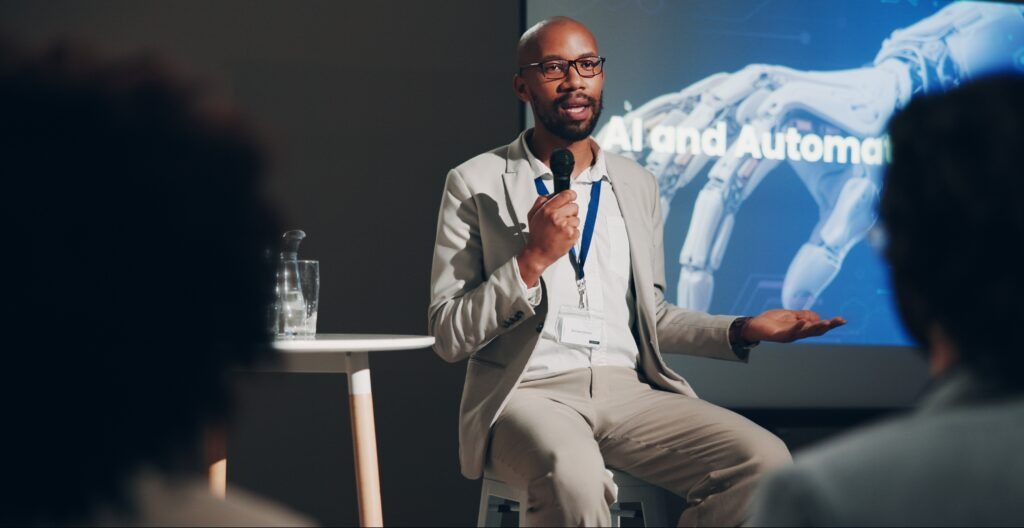
There’s a certain level of courage required to put your own name to something. Or to stand up and speak with your own voice – much more so than reading out an approved corporate line, written by committee. The corporate line, and the quote attributed to a nameless ‘spokesperson’ will always be with us – but people are relational beings – and when we hear something directly from another human, the likelihood we trust that statement goes up considerably. And even if we’re not wholly convinced, the likelihood that we notice and engage with what has been said is far greater than if we’d heard it from a faceless corporation.
When a brand ‘speaks’ – it’s advertising. There’s nothing wrong with that – in fact it’s a critically important part of brand development and success. But to truly build trust, the people behind that brand need to speak with their own voices.
LinkedIn provides a great example of this in action. Corporate accounts abound, and serve a useful function in communicating key corporate messages. We have one ourselves of course at AD Comms. You might even be reading these words because you were directed here from an AD post.
But we know, as all regular LinkedIn users know, that it’s when our own people post our stories, and comment with their own voices that we get much higher levels of meaningful engagement and dialogue. LinkedIn’s algorithms amplify this – but that’s because they want to encourage more of what works. Personal LinkedIn accounts don’t get more engagement than corporate accounts because they’re boosted by the LinkedIn algorithm. They’re boosted by the LinkedIn algorithm because they get more engagement.
In other words, people like to hear from people.
A recent Harris poll makes this abundantly clear. The 2026 study found that 78% of survey respondents said posts from a company’s employees are more ‘authentic’ than those from official corporate accounts. 74% meanwhile, declared that they found employees’ advocacy to be more influential than traditional marketing in shaping a company’s brand*1.
Earned trust
Speaking with a human voice though, is a start, but it’s not enough in and of itself. Trust, of course, needs to be earned. It’s earned by speaking honestly and authentically. It’s earned by thinking deeply about issues and presenting a unique perspective. It’s earned by having the courage to put a view out there, even if others are likely to disagree. It comes from being honest about areas of uncertainty, and it comes from expertise, experience and time.
Authenticity is at the heart of building trust. Human-centred comms are worthless if the people delivering them hide behind ‘safe’ corporate lines and refuse to engage with good faith, discussion and debate.
Final thoughts
Brands advertise. People advocate. But real trust is developed through human engagement. Turn your people, and your leadership team in particular, into thought leaders and advocates – by using their own authentic voices and personalities. They will take trust in your business far beyond what any corporate ad campaign could ever achieve.
*1: The Guide ‘Harris Poll: Employee Voice: The New Standard for Brand Credibility and Customer Trust’ February 2026