
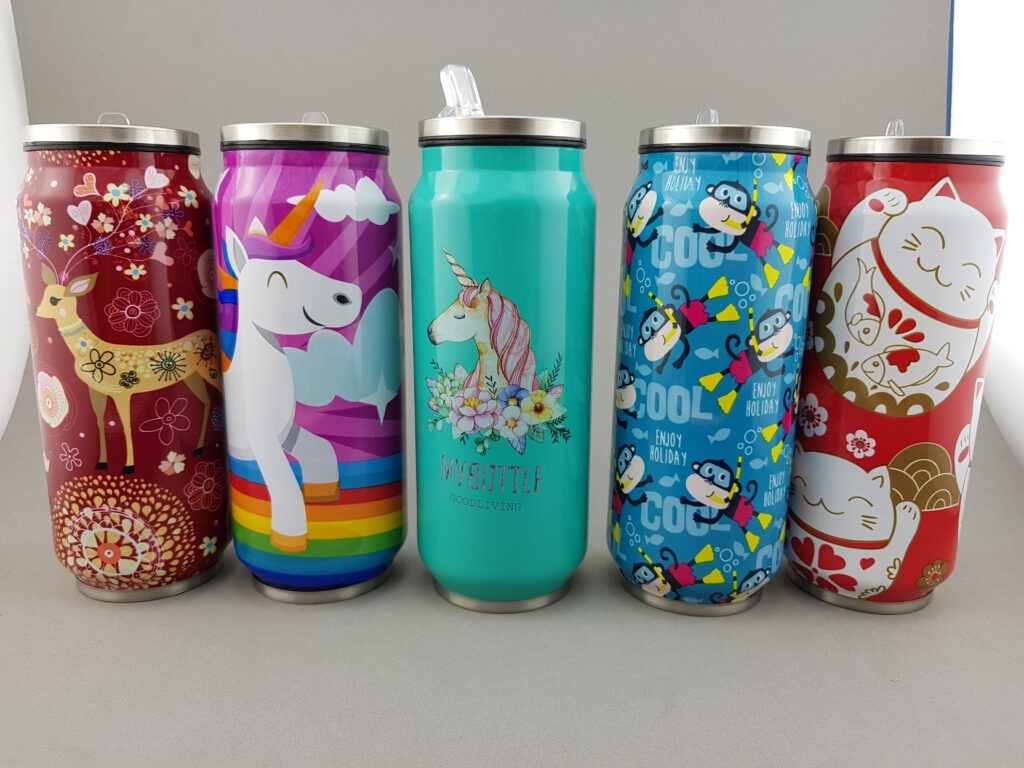
TL;DR:
Digital direct-to-container printing has moved from experimental to industrially viable and is now delivering the speed, quality and reliability needed for production in specific use cases. It won’t replace analogue for long, low-cost print runs, but it does excel where flexibility matters – shorter runs, multiple SKUs, fast turnaround and late-stage design changes. Of course, growing regulatory pressure around recyclability is also strengthening its appeal. The real shift is not substitution, but a rethink of when and how packaging gets printed.
When this question was first asked in 2016, direct-to-container (DTC) digital printing sat firmly in the category of emerging technology. The potential was clear, but the barriers were equally evident: limited speed, uncertain reliability and a perception that digital was suitable only for promotional or niche applications. Nearly a decade on, the conversation has changed, not because digital has replaced analogue container decoration wholesale, but because it has matured into a credible industrial production tool in defined use cases.
DIRECT-TO-CONTAINER DIGITAL PRINTING COMES OF AGE
In 2016 when we first blogged on this topic, direct-to-container (DTC) digital printing sat firmly in the category of emerging technology. The potential was clear, but the barriers were equally evident: limited speed, uncertain reliability and a perception that digital was suitable only for promotional or niche applications. Nearly a decade on, the conversation has changed, not because digital has replaced analogue container decoration wholesale, but because it has matured into a credible industrial production tool in defined use cases.
Why digital DTC was once seen as limited
In 2016, the core challenge was simple to articulate but hard to solve. For digital technology to be taken seriously for direct container decoration, it had to meet three crucial criteria:
- Print quality equal to existing analogue processes, so brand owners faced no risk to brand integrity
- Production speeds compatible with mass manufacture, not just demonstrations or proof-of-concept runs
- Industrial robustness, capable of operating reliably, shift after shift, in demanding production environments
At that point, most digital DTC solutions could meet one or two of those criteria, but rarely all three at the same time. As a result, digital was widely seen as a complementary technology rather than substitute: useful for prototypes, promotions and trials, but not a realistic alternative to dry offset, flexo or screen in volume container production.
What’s changed — and what hasn’t
The most significant change since 2016 is that speed and robustness are no longer purely theoretical constraints.
Today, commercially available digital DTC systems are running at sustained industrial throughputs for specific container formats, most notably beverage cans (up to 500/minute). Production speeds that once seemed incompatible with digital systems are now being achieved continuously, not just under laboratory conditions.
At the same time, advances in printheads, inks and colour management mean that digital print quality (now offering a print resolution of up to 1200dpi) is no longer the primary point of contention. High-opacity whites, broader colour gamuts and improved consistency have brought digital output to a level acceptable for premium branded packaging, not just secondary or limited-edition applications.
What hasn’t changed, however, is the reality that analogue processes still dominate where very long runs, ultra-low unit costs and minimal design variation are the overriding priorities. Digital DTC has not replaced analogue everywhere and is unlikely ever to do so.
Where digital DTC is proving its value
Rather than trying to beat analogue at its own game, digital direct-to-container printing has found commercial traction by excelling where traditional processes are least flexible:
- Short to medium production runs
- Increasing SKU proliferation
- Rapid product launches and campaign-driven graphics
- Late-stage versioning close to filling or distribution
In these environments, the ability to print directly onto the container without plates, screens or lengthy changeovers fundamentally alters the economics of production. What was once prohibitively complex or inefficient with analogue processes becomes commercially viable and, in some cases, strategically advantageous.
Regulation is starting to add momentum
Regulatory pressure is also beginning to drive adoption. In the Canadian province of Quebec, environmental legislation effectively prohibited the use of shrink-sleeve and pressure-sensitive labels on aluminium beverage cans, directly incentivising converters to invest in direct-to-can digital decoration as a compliant, fully recyclable alternative. Quebec may prove to have been ahead of the curve. The EU’s Packaging and Packaging Waste Regulation (PPWR), which comes into force across all member states from August 2026, requires all packaging to meet recyclability standards that shrink sleeves on aluminium cans are unlikely to satisfy. The practical effect across European markets may not be identical to Quebec’s direct prohibition, but the commercial case for direct-to-container digital decoration as a regulatory-compliant alternative is likely to strengthen considerably.
From promise to deployment
Another clear indicator of market progress is the emergence of industrial OEMs with real installations, funding and customer pipelines, rather than purely developmental platforms.
German OEM Hinterkopf is one example of how the technology has progressed from prototype to production reality since 2016. The company now has around 50 digital machines operating across the globe – printing on a range of cylindrical containers including tubes, aerosol cans, bottles and beverage cans – and in 2023 launched its fourth-generation system, incorporating higher resolution, increased production speed and a “Heat-Free Decorating System” designed to reduce energy consumption.
Investment activity reflects wider confidence in the sector. In April 2024, Israel-based Velox – developer of direct-to-shape digital decoration systems for beverage cans, tubes and aerosols – closed a $38 million private equity funding round. Nevertheless, not every player has navigated the transition successfully. Tonejet, the UK-based pioneer of direct-to-can digital printing using electrostatic drop-on-demand technology, was wound up in late 2025, demonstrating that technical innovation alone is not sufficient to guarantee commercial success.
Final thoughts
Ten years ago, the key question was whether digital technology could ever deliver the “complete package” required for direct-to-container printing: quality, speed and reliability without compromise. Today, that question has largely been answered, but with an important caveat. Digital DTC does not win by replacing analogue across the board. It wins by transforming the economics of complexity, variation and speed to market. The more relevant question now is not whether digital direct-to-container printing works, but how far brand owners and converters are prepared to rethink established production models to take advantage of what it makes possible.