
TL;DR:
As interpack 2026 approaches, key topics set to dominate the exhibition include smart manufacturing driven by AI and automation, navigating the complex landscape of regulation and compliance, and the ever-pressing need for sustainability in the packaging value chain. The global packaging industry is also facing major challenges with supply chain disruptions and energy costs. Innovation will be at the heart of the solutions driving the industry forward. In this blog, Daniel explores these emerging trends and what we can expect to see at this year’s event.
UNPACKING INTERPACK 2026
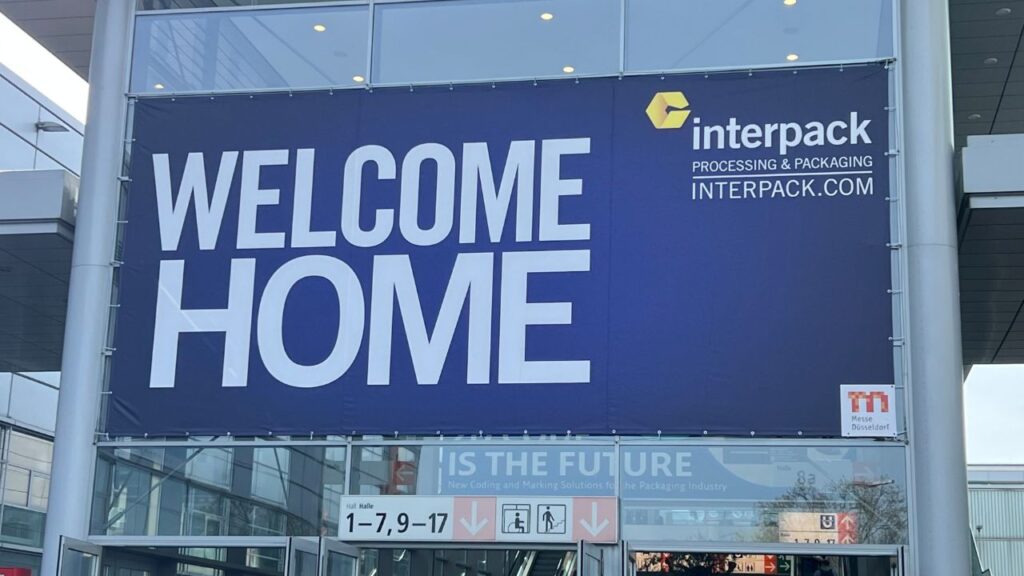
The flights and hotels are booked, the stand plans are finalised and the doors of the famous Messe Düsseldorf will swing open in a matter of days to welcome interpack exhibitors and visitors from around the world. What are they all going to be talking about? What are the challenges keeping brand owners and packaging producers awake at night, and what are the opportunities for growth they’re seeking to exploit?
The packaging supply chain, involving everyone from raw materials producers at one end, to retailers at the other, is long and complex – as is the list of topics and themes that will be discussed at the show. But there’s no crystal ball necessary to know where the emphasis is going to be. From LinkedIn chatter and media preview issues, to interpack’s own pre-show musings – here is a short (and of course far-from-exhaustive) list of some of the topics I expect to hear plenty about when I’m in Düsseldorf myself in a couple of weeks’ time:
Smart manufacturing
From automation and robotics to AI, the pace of technological change in the world around us is gathering speed, and the world of packaging is no exception. From AI-driven autonomous packaging lines to ‘cognitive manufacturing’, AI’s ability to transform automated production from merely reliable and predictable to adaptive, evolving and ever-improving will be a hugely important theme, and an area where there really has been a true step change since interpack 2023.
Regulation and compliance
EPR legislation has gone live in many countries since the last iteration of interpack three years ago, and this is just one example of many regulatory changes affecting all parts of the packaging supply chain. These range from the Packaging and Packaging Waste Regulation (PPWR), to the Single Use Plastics Directive, and multiple other changes – from deposit return schemes to plastic bags directives and recyclability and design requirements.
The complexity of multiple overlapping national and regional regulations requires careful planning to avoid the risk of costly fines. For many exhibitors at interpack 2026, positioning themselves as partners with the expertise to help navigate this potential legal minefield will be crucial to their success.
Sustainability
Sustainability in packaging is an evergreen topic at interpack and it’s closely aligned to regulation and compliance, but t’s a topic that goes well beyond mere adherence to legislation. Environmental best practice is increasingly demanded by consumers as well as governments,so businesses at all stages of the packaging supply chain need to convince their partners as well as consumers that they’re doing all they reasonably can to reduce their environmental impact – not simply because they have to, but because they see it as the right thing to do.
Supply chain challenges and energy costs
This would have been a key topic even before the war in Iran, but the global disruption caused by the fighting in the Middle East and the closing of the Strait of Hormuz will have pushed this up the agenda still further. Packaging production, like most manufacturing, is a relatively energy-intensive business, and sky-high power prices pose a major production challenge – just as soaring fuel prices do for logistics.
Meanwhile, the disruption to shipping lanes in the region also has a direct impact on the refined petroleum and petrochemical exports critical to many aspects of packaging manufacturing – especially plastics.
Improving manufacturing efficiency – to make more with less – will be a big topic of conversation, as will broadening supply chains to find alternatives.
Innovation
Last, but by no means least, innovation is integral to all of the topics explored above. It’s what’s driving the automation and AI revolution in the industry. It’s the key to more sustainable, recyclable and legally compliant packaging alternatives. And it’s also fundamental to developing more efficient methods of production.
All interpack 2026 exhibitors will be positioning themselves as innovators, something that will be more true in some cases than others. But what is very clear is that we’ve come a long way since 2023 and I’m looking forward to seeing it for myself.